Why a Jacket’s Shoulder Line Changes Its Whole Shape
Learn how a jacket shoulder line, seam placement, and padding shift its silhouette so you can compare jackets by proportion, movement, and personal preference.

You slip on a navy jacket in a fitting room, smooth the lapels, and notice that the sleeves seem to point outward. The jacket shoulder line is doing more than marking where a sleeve begins: its seam, padding, and slope influence the shape the rest of the garment presents. Looking at those details in order makes it easier to compare jackets without treating one shoulder style as the correct one.
Start with the shoulder seam
Find the seam joining the jacket’s body to its sleeve. On many jackets, it sits near the point where the shoulder slopes toward the arm. Its position gives you a useful first clue about the intended outline.
A seam that sits at or close to the shoulder’s edge usually defines a relatively clear shoulder boundary. A seam that falls farther down the upper arm can create a softer, broader-looking line, as in some relaxed or dropped-shoulder designs. A seam set farther inward may make the shoulder look more compact or sharply tailored, depending on the jacket’s cut and construction.
Do not judge the seam position from the front alone. Turn slightly to each side and look at how the fabric meets the sleeve. If the seam twists toward the front or back, the jacket may be sitting unevenly, or its shape may not suit your posture. A small difference can come from the garment’s design; a pronounced pull or diagonal wrinkle is a reason to try another size or cut.
Check both shoulders. Bodies are not always symmetrical, and garments can hang differently from one side to the other. The aim is not to make every seam land on an imagined exact point. Notice whether the jacket looks intentional and feels comfortable when you stand naturally.
Read the slope before judging the width
Shoulders slope from the base of the neck toward the arm, but the angle varies among people and among jackets. A jacket with a relatively level shoulder line can look crisp and broad. A more sloped line tends to follow the body’s contour and can appear less angular.
Padding changes how clearly that slope reads. Firm padding can support a level, squared outline; lighter or absent padding usually lets the fabric follow the wearer more closely. Neither construction is automatically more flattering. The visual effect depends on the jacket’s full proportions, including the lapels, sleeve shape, body width, and length.
Look at the line from the collar toward the sleeve cap, the rounded section at the top of the sleeve. Does it form a clean transition, or does fabric bunch near the neck or hang away from the shoulder? A tidy transition often helps a jacket look composed. But a soft line can be exactly what a relaxed design is meant to create.
Try the jacket with your arms resting at your sides, then reach forward as if taking a book from a shelf. The shoulder should allow ordinary movement without pulling hard across the back or lifting the entire body of the jacket. Movement is part of the silhouette: a jacket that looks crisp only while you stand like a coat rack has a narrow use case.
Compare padding with the jacket’s intended shape
Padding is material built into the shoulder to add support or volume. Some jackets use a thin layer that subtly smooths the line; others use firmer padding that makes the shoulder more pronounced. Unstructured jackets may use little or none.
To compare padding, first look at the jacket on a hanger, then wear it. On the hanger, note whether the shoulder keeps a distinct shape without your body inside it. On you, notice whether that shape extends beyond your natural shoulder, follows it, or seems to collapse. The hanger view shows the garment’s construction; the worn view shows how that construction interacts with your frame.
A stronger shoulder can balance a roomy body or a substantial lapel by giving the upper part of the jacket a defined outline. A softer shoulder can make a formal cut feel less rigid, or help a casual jacket sit quietly over a shirt. These are tendencies, not rules. A pronounced shoulder may feel right with a narrow body, while a soft one may suit a broad lapel; the whole garment decides the result.
Imagine you are comparing two charcoal jackets with similar lengths. One has light padding and a seam close to your shoulder edge; the other has firmer padding and a slightly wider outline. If the first looks restrained but the second makes the lapel and body seem more balanced to you, the second may be the better choice for the clothes you plan to wear with it. That is a preference informed by observation, not a verdict about what your body ought to look like.
Check the sleeve and body as one outline
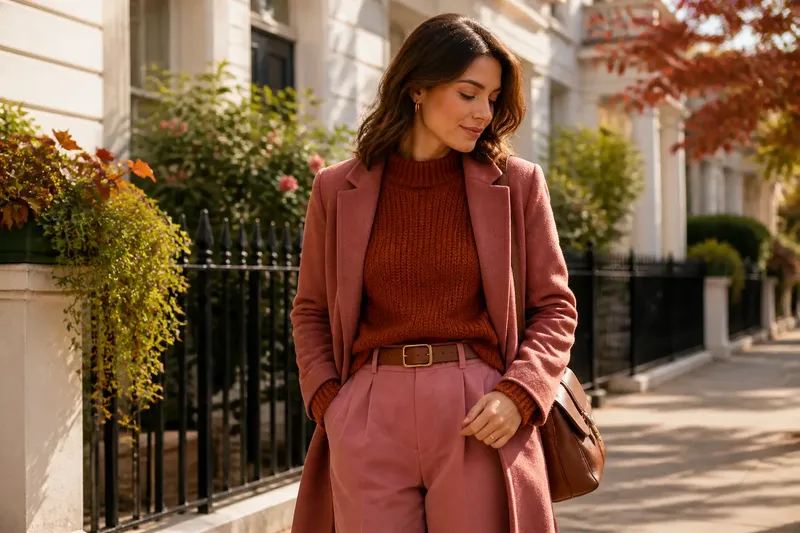
A shoulder line does not stop at the seam. It directs the eye down the sleeve and across the jacket body. A squared shoulder paired with a narrow sleeve may look sharply defined; a soft shoulder with a roomy sleeve can feel deliberately easy. When the parts disagree, the jacket can look awkward even if each detail seems plausible on its own.
Stand in front of a mirror at a comfortable distance. Look first at the outline around the collar, shoulders, sleeves, and sides. Then turn to a side view. Ask whether the shoulder looks connected to the body of the jacket, rather than perched above it or swallowed by it.
Try the jacket over the kind of layer you expect to wear beneath it. A fine shirt and a heavier sweater occupy different space at the shoulder and upper arm. The shoulder line may appear neat over one and strained over the other. A jacket should not have to accommodate every possible layer, but its intended use should be clear to you.
Fabric matters too. A crisp, heavier cloth can hold a firmer edge, while a fluid or lightweight fabric may soften the same pattern. Seams and padding are easier to read when the jacket is buttoned and unbuttoned, so check both. Buttoning can draw the body inward and make the shoulder look more dominant; leaving it open may reveal a looser, less structured outline.
Use a consistent fitting-room comparison
When several jackets are available, compare them under the same conditions. Wear the same shirt, keep your stance relaxed, and check each one from the front, side, and back. If you switch between a thick sweater and a thin top, it becomes harder to tell whether a change comes from the jacket or the layer beneath it.
For each jacket, make a few simple observations:
- Seam placement: Note whether the seam sits near your shoulder edge, farther inward, or down the upper arm.
- Shoulder slope: Look for a level, squared line or a line that follows a steeper natural slope.
- Padding: Notice whether the shoulder is softly shaped, clearly supported, or visibly extended.
- Fabric behavior: Check for puckering, collapsing, or a smooth transition into the sleeve.
- Movement: Reach forward and lower your arms again. Observe whether the jacket pulls or shifts out of place.
- Whole-jacket balance: Consider how the shoulder works with the lapels, body width, sleeve, and length.
Use those notes to compare, not to score. A jacket with a more pronounced shoulder is not inherently better made, and a soft shoulder is not automatically more comfortable. Fit, construction, fabric, and personal taste all contribute. If the choice remains close, consider which shape feels more like the clothes you already reach for.
What should you ask while trying on a jacket?
Should the shoulder seam sit exactly at my shoulder edge?
Not always. Many tailored jackets place the seam near the shoulder edge, while relaxed designs may intentionally extend it. Judge the seam alongside the sleeve shape, overall cut, and comfort rather than treating one location as a universal fit rule.
Can padding make my shoulders look broader?
It can create a more defined or extended outline, particularly when the padding is firm or the cut is squared. The effect varies with the jacket’s fabric, lapels, and body shape, so compare the garment on rather than relying on the hanger.
Is a jacket with no padding less formal?
Not necessarily. A cleanly constructed, unpadded jacket can still look polished, while fabric and details influence how formal it feels. The shoulder structure is one part of the impression, not a dress-code rule by itself.
When should I consider tailoring?
Tailoring may help with certain fit issues, such as sleeve length or the way the body closes, but shoulder alterations can be complex. Ask a qualified tailor to assess the garment before buying it for alteration, especially if the shoulder seam or padding would need substantial change.
Choose the line that works with your clothes
A jacket shoulder line is easiest to judge when you separate its parts: seam position, slope, padding, fabric, and the way the sleeve joins the body. Then bring those observations back together. A sharp shoulder may reinforce a crisp outfit; a soft one may suit a looser combination. The useful choice is the shape that looks coherent with the jacket’s other proportions and feels comfortable in the situations where you expect to wear it.
Before deciding, step away from the mirror and move naturally for a moment. Notice whether you keep adjusting the collar or shrugging the jacket back into place. That small, ordinary movement can tell you more than a perfectly still pose, and it keeps the jacket shoulder line connected to the way you will actually wear the garment.