Packing for a Two-Day Visit with Clothes You Already Wear
Packing for a two-day visit is easier when familiar clothes answer the itinerary first, combine without fuss, and still leave room for personal preference.
You are folding a shirt you wear often when the host texts: dinner out Friday, a walk Saturday, home by Sunday. Packing for a two-day visit works best when the clothes start with those plans, not with an imaginary version of you who changes outfits at every opportunity.
The aim is a small, usable selection of familiar garments, with combinations that suit the visit and one or two choices that make the bag feel like yours. Use this numbered method to decide what earns its place.
1. Write down what the visit actually includes
Make a plain list of known activities: travel, meals, time outdoors, sleeping, and any event with a particular dress expectation. Add likely changes in setting, such as going from a car to a restaurant or from a guest room to a shared kitchen. This list is the brief for the clothes, not a schedule that needs military supervision.
Separate confirmed plans from guesses. “Dinner at a casual restaurant” is useful. “Perhaps a gallery, then a long walk, then an impromptu garden party” is an itinerary assembled by an anxious packing brain. If a plan is uncertain, choose a garment that can adapt rather than packing a full outfit for every possibility.
Say you are visiting a cousin for Friday dinner, Saturday errands and a relaxed evening, then leaving Sunday morning. You could note one dinner setting, a lot of ordinary indoor time, and a short walk. The expected observable result is a list that points to a few practical outfit needs instead of a different costume for each hour.
2. Mark the clothes you already reach for
Start with garments you wear in ordinary life and know how to handle: a familiar pair of trousers, a soft knit, a shirt that sits comfortably, or a skirt you can move in. Familiarity matters because you already know how the pieces feel, how they sit together, and whether you spend the day adjusting them.
Use a quick test for each candidate: can you picture wearing it during one of the listed activities, and would you choose it on a normal day? If the answer to both is no, leave it on the hanger. A visit is a poor place to trial an ambitious outfit whose main virtue is that it looked persuasive under bedroom lighting.
Keep the choice personal rather than aspirational. If you usually wear sneakers, a familiar clean pair may be more useful than dress shoes brought to satisfy a vague idea of what a guest should wear. If you like a particular color or silhouette, make room for it where it suits the plans.
3. Build a small set around repeatable combinations
Choose a few tops and bottoms that can pair in more than one way. A useful set might include two tops, two bottoms, and a light layer, adjusted to the activities and weather. That is a planning prompt, not a fixed packing quota; the useful number depends on what you will do and what you prefer to wear.
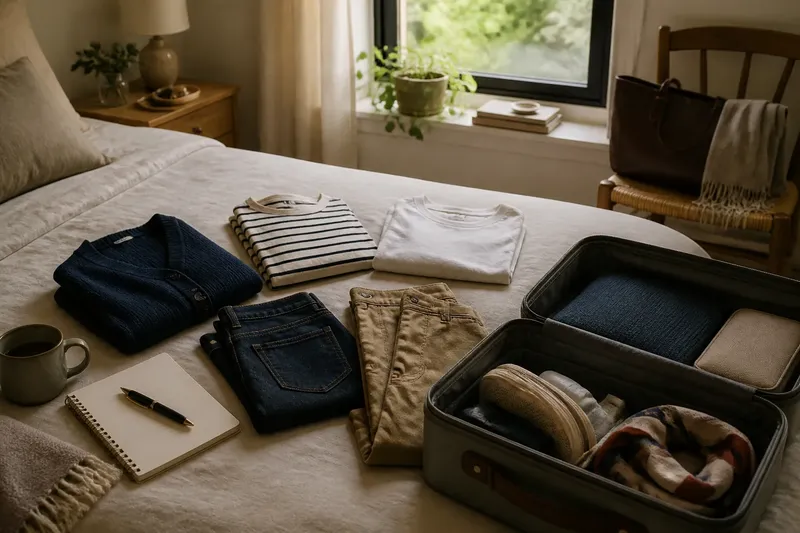
Lay the candidates together on a bed or hang them on one section of the closet rod. Check actual combinations, rather than assuming that everything neutral coordinates by virtue of being quiet. A patterned top may work with one bottom but compete with another; a cardigan may pull the whole set together without making every outfit identical.
- Pick a base bottom that suits travel or the least formal activity.
- Add a second bottom only if it creates a genuinely different useful outfit.
- Choose tops that work with at least one bottom each, preferably both.
- Include a layer if the visit involves a cooler room, evening air, or changing conditions.
- Keep one color, print, or shape that feels distinctly like your usual style.
For the cousin visit, imagine a traveler who often wears dark jeans, a striped shirt, a plain tee, and a cardigan. The jeans and tee could work for the drive and errands; the striped shirt with the same jeans could suit dinner; the cardigan could make either combination comfortable indoors. The expected observable result is several plausible outfits from a handful of pieces, not a promise that every garment works in every setting.
4. Give each activity a clear outfit route
Assign clothes to the activity list without turning the list into a rigid uniform. Decide what you will wear for travel, what can serve the main social occasion, and what you want for the final morning. Repeating a bottom or layer is ordinary. It also means you do not have to pack a separate outfit for sitting down to breakfast.
For an occasion that asks for a little more polish, first see whether a familiar shirt, a tidier pair of trousers, or a simple accessory changes the feel of an existing combination. If the event has a stated dress expectation, use that information directly. Do not pack a special garment merely because “dinner” sounds formal in the abstract.
Keep comfort in view during travel. A garment that wrinkles easily, needs frequent adjustment, or makes sitting unpleasant may be a poor choice for a long ride, even if it works at the destination. It can still earn a place for another activity, but it should not be assigned a job it is unlikely to do comfortably.
5. Check the practical gaps before adding more
Look for missing categories rather than adding garments at random. Sleepwear, underwear, socks, weather-appropriate outerwear, and shoes suited to the activities may matter more than a third top. Include toiletries and any needed personal items separately, so a clothing decision does not become tangled with the rest of the bag.
For shoes, ask where you will walk and whether one pair can handle more than one part of the visit. A comfortable everyday pair may cover travel and errands; another pair belongs in the bag if a known activity calls for it or if you prefer a change. Shoes take space and often dictate the mood of an outfit, so decide their role before packing them.
Check the weather close to departure, then adjust a layer or outer garment if needed. If you are unsure about a garment’s care or a venue’s dress requirements, follow its label, the maker’s instructions, or the venue’s guidance. Keep the clothing decision tied to what you can reasonably expect, rather than packing for every weather forecast in the region.
6. Leave room for a real preference
A compact set should still include something you simply like. That might be a bright scarf, a favorite shirt, earrings, or the soft sweatshirt you reach for on a quiet evening. It need not be the most versatile item in the bag. Its purpose is to make the selection feel chosen rather than merely efficient.
Give that preference a specific place in the visit. A scarf may add color to a plain top; earrings may suit dinner; a sweatshirt may be welcome after a walk. If it has no plausible use, you may still bring it, but make that an intentional choice rather than an excuse to keep adding “just in case” pieces.
7. Pack by outfit, then remove the spare guess
Once the garments are chosen, group them by outfit in your mind or lay out each combination once. This catches a missing layer or a top that only works with the garment you decided not to bring. Then fold or roll the clothes in the way that suits your bag and the fabrics; the packing method matters less than knowing what each piece is for.
Before closing the bag, look at every item and ask whether it serves a listed activity, completes a combination, or is a preference you deliberately made room for. If it does none of those things, it is probably a guess. Remove that guess before removing the garment that makes the whole set feel like you.
What should you pack for a two-day visit?
How many outfits do I need for a two-day visit?
Plan around the activities, not a universal outfit count. Include what you want for travel, any distinct occasion, ordinary downtime, and the return trip, while allowing familiar pieces to repeat.
Should I pack clothes I have not worn before?
Usually, familiar garments are the easier choice because you know how they feel and what they pair with. Bring an untried item only if a specific activity gives it a clear purpose and you are comfortable with the uncertainty.
How do I pack for casual dinner plans?
Use the host’s description and the venue, if known, rather than treating every dinner as a formal event. A familiar shirt or accessory may give an everyday combination the finish you want without requiring a separate outfit.
What if the plans change after I arrive?
Leave one flexible combination in the set, such as a comfortable bottom with a top that can work indoors or out. For a major change in dress expectations or weather, ask the host what is needed instead of trying to pack for every possible revision.
Packing for a two-day visit is a modest exercise in trusting the clothes you already wear. Begin with the known plans, make sure the pieces form usable combinations, and preserve a little space for preference. The best final check is simple: can you name when you would wear each item without inventing an entirely new weekend?